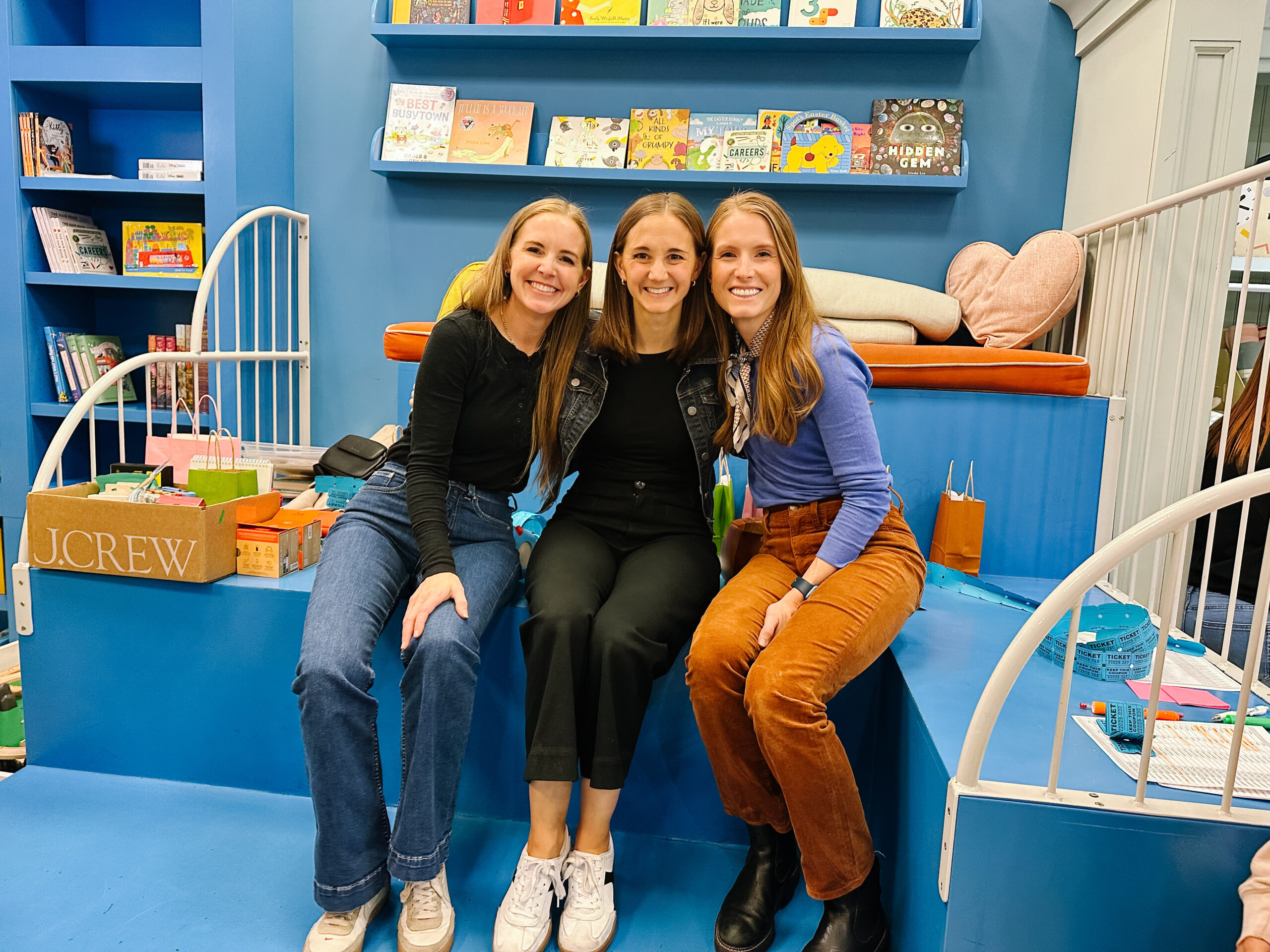
Last year I couldn’t stop thinking about hosting a Yoto card exchange.
Finally, in the fall, I decided I was ready to make it happen.
A local toy store, Blickenstaffs, agreed to let us use their store to host the swap and off we went!
I set up tickets on Eventbrite and made them available to anyone in my audience who wanted to come (I priced tickets at $10 and then absorbed all of Eventbrite’s ticketing fees – my goal wasn’t to make money from this event but I’ve seen time and time again that when tickets are free, people don’t value them very much and end up not showing up).
They were sold out about a week before the event.
I’ve been to a lot of influencer events and wanted this to be as fun and special as many of them, so I created gift bags – I bought these little gift bags on Amazon, then each bag included a set of 10 tabs and a ring for Yoto cards (my favorite way to store Yoto cards!), a gift certificate for a free audiobook of your choice from LibroFM (they emailed after posting about this event and asked if they could provide an audiobook for each participant, which was super generous, and their audiobooks can be made into Yoto cards, so that was perfect!), and a wallet from Thread.
I also have plenty of Yoto store credit, so I ordered enough Yoto cards so that each person could choose a new card to take home (and I chose good cards – nothing super cheap or unappealing).
Basically, I wanted to make sure that – since I was charging for tickets – each person would feel like they were getting their money’s worth, even without the card exchange portion of the event!
My sister who lives nearby offered to help with the event (bless her!) and Jen from my team is local and she baked all the treats and helped organize this event!
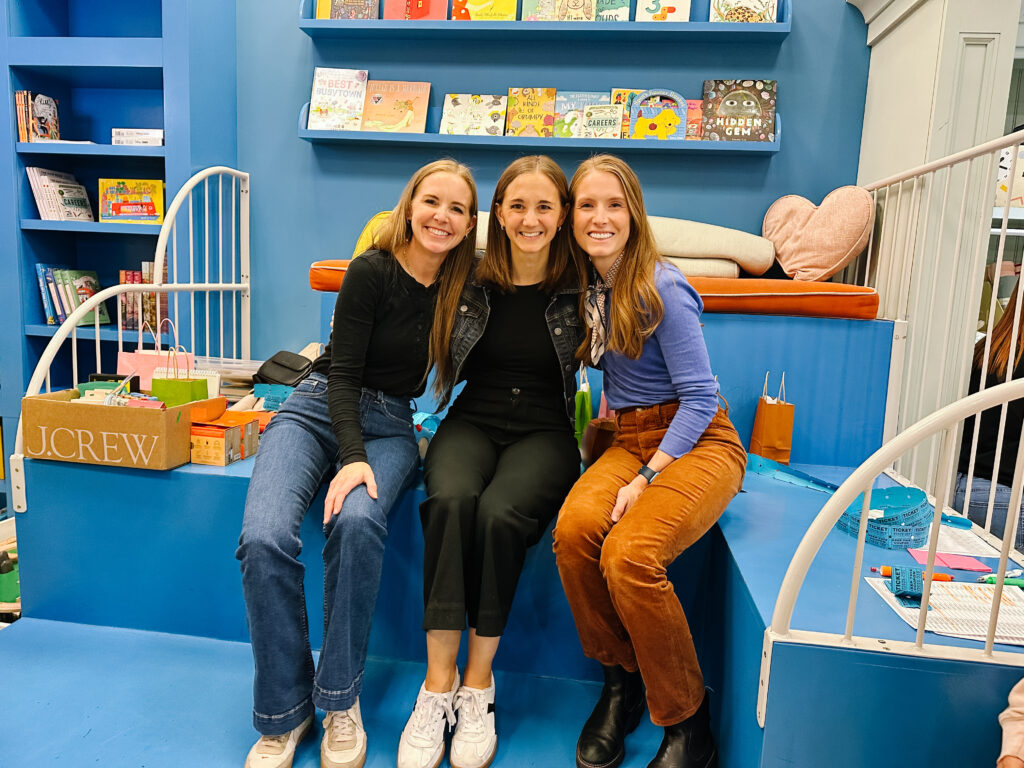
Here is the email I sent to ticket holders:
“I’m so excited you got a ticket to the Yoto Card Swap next week – it’s going to be a fun night and I can’t wait to see you!”
A few things:
1) We will be hosting this event at Blickenstaff in Riverwoods – they generously offered to host us and it is such a fun toy store!
2) We’ll start check-in, hand out goody bags (we’ve got some FUN surprises for you!), and let you choose your free card at 7 p.m. We’ll also feature all the trading cards so you can browse through them before you actually start trading them!
3) You can bring as many trading cards as you want. (And it won’t hurt my feelings if you decide to redeem your free card either!). We will also have an area for you to buy or sell Yoto cards and accessories if you prefer to do that rather than trade!
4) This event is intended for adults. Please don’t bring kids – it will be too chaotic to deal with kids who are excited about Yoto cards when we will already have 85+ adults trying to choose cards! If you purchased a ticket for a child, please let me know.
5) There is a waiting list for this event – if you can no longer come, please let me know so I can pass this ticket on to someone else who wants to come.
If you have any questions about the event, please let me know – I’ll be happy to answer any questions you may have and look forward to seeing you next week!
This is how the Yoto card exchange works!
Jen, Landen and I arrived early, cleared a spot in the toy store and set up 3 folding tables for people to put their cards on. We displayed all the free Yoto cards on a display wall so people could choose their free card. Jen had baked cookies and bought chocolates, mini water bottles and napkins and we got everything ready too. We also printed out lists of everyone who had purchased tickets so we could check people in.
When the event started, we started lining up to check people in and give them raffle tickets for each Yoto card they brought.
Once you were checked in, you collected your goody bag, put all the cards you wanted to trade on the tables, collected your free Yoto card from the screen, and then you got to visit and browse the trading cards before the trade actually began.
After everyone was checked in and they had a few minutes to get everything sorted, I welcomed everyone and explained how it would work.
Basically, you could take as many cards as you brought and we were all going to act like nice adults who wouldn’t rush everyone to get a card. Once you picked your cards, you took them back to Landen, Jen, or me and we checked you by taking half of each raffle ticket for every card you took.
We put all these raffle tickets in a box that I could draw from because I had prizes to give away at the end.
The exchange and departure took maybe 20 minutes.
(I had said in the email that we would have space to sell cards if you wanted and I pointed that out in the welcome, but I never saw anyone actually use it).
Once all the cards were gone (except for a few Crackling Fire and other cards that no one seemed to want), I called everyone back to attention and drew tickets for the drawings.
I had packs of cards (Harry Potter, Boxcar Children, Narwhal, and Jelly cards, and other favorite games), things like my favorite light-up book, and two Yoto Mini readers.
Luckily, no one ended up winning twice, which was quite surprising because some people brought over 20 cards and had 20 tickets for the draw!
Then we packed up the tables and headed home – the whole event only lasted about an hour (my ideal length for an event).
It was so fun meeting lots of other Yoto lovers and I felt like it was all a great success and not very stressful to make!
The biggest question I was asked was “could I do this as an unpaid/community event” and I absolutely think so!
I think it would be really fun for libraries to host something like this (my library hosts a puzzle exchange twice a year, which is what inspired this idea in the first place) or to host one in a homeschool group, PTA, or neighborhood group.
You obviously wouldn’t need to do some extra things like a raffle, a free card for each participant or goody bags!
Do you have any further questions about how Yoto Card Exchange works? I’m happy to answer any questions you have!
If you liked this article about Yoto card exchange, you might also like these other articles:
PakarPBN
A Private Blog Network (PBN) is a collection of websites that are controlled by a single individual or organization and used primarily to build backlinks to a “money site” in order to influence its ranking in search engines such as Google. The core idea behind a PBN is based on the importance of backlinks in Google’s ranking algorithm. Since Google views backlinks as signals of authority and trust, some website owners attempt to artificially create these signals through a controlled network of sites.
In a typical PBN setup, the owner acquires expired or aged domains that already have existing authority, backlinks, and history. These domains are rebuilt with new content and hosted separately, often using different IP addresses, hosting providers, themes, and ownership details to make them appear unrelated. Within the content published on these sites, links are strategically placed that point to the main website the owner wants to rank higher. By doing this, the owner attempts to pass link equity (also known as “link juice”) from the PBN sites to the target website.
The purpose of a PBN is to give the impression that the target website is naturally earning links from multiple independent sources. If done effectively, this can temporarily improve keyword rankings, increase organic visibility, and drive more traffic from search results.
